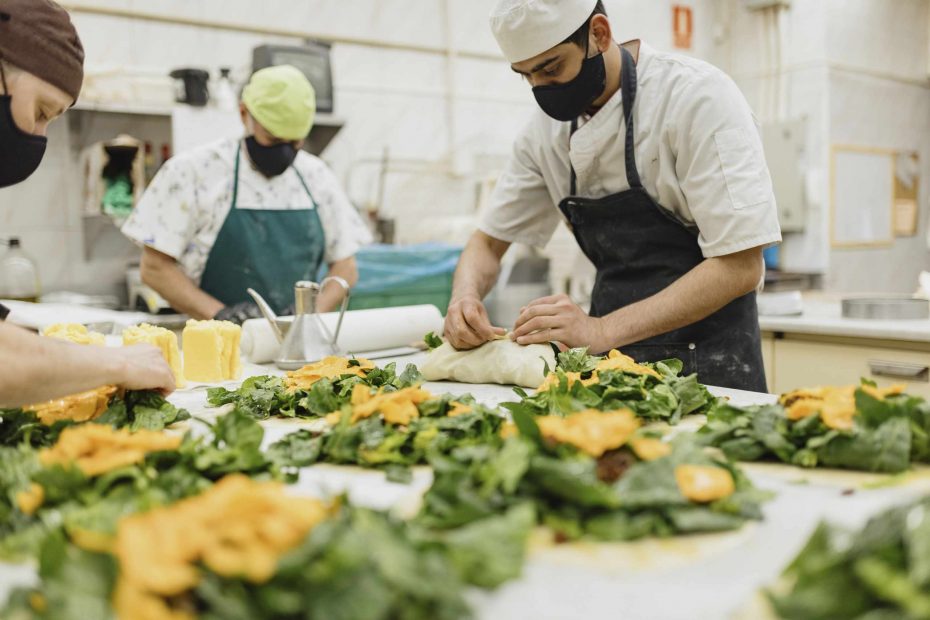
A board half-filled with chopped veggies, a pan warming too fast, a recipe requesting you to measure an ingredient not yet portioned, all that can make cooking feel faster than it is. Mise en place is the practice of having your ingredients, equipment, and minor prep steps organized and ready before you get started. It doesn’t dress up the recipe. It just removes the scramble.
Before heat, put the recipe in view; read the whole thing once before you touch anything. Identify verbs in it: chop, rinse, drain, measure, simmer, whisk, rest, garnish. Verbs show you which tasks need time and space and which tasks need the timing of the stove. Garlic must be peeled and minced before the onions are ready to go in together. If a sauce needs vinegar, oil, salt, sweet, then keep them near enough to reach as the pot simmers without turning your back.
In a small cook session, build in three zones. Prep bowls with washed and cut ingredients should be close to your board. Tools such as spatula, wooden spoon, tasting spoon, timer and measuring spoons should be at your elbow by the stovetop. Finishing items: garnish, sauce, serving plate, tasting journal should be off the burners but easy to see. This lets you watch the dish as a sequence rather than as a jumble of things you must do quickly.
Too often beginning cooks lose the plot before heat is on. But once that pan’s hot, everything in it changes fast, especially in stir-fries and pan-sears: onions get limp, garlic turns black, liquid boils away, and golden can go scorched faster than your hand can fetch a strainer or a lid. Mise en place gives you moments to see, smell, feel, and taste because your brain isn’t divided between cooking and running to catch up.
Another win: it makes seasoning easier. When salt, acid, fat, and sweet are either measured or within your fingertips, you can correct in smaller increments. A tasting spoon then feels like a friend, not a last-ditch rescue. You’re able to taste and stir and wait and taste again, so the food has room to tell you what it wants, and you a chance to learn what you need to do.
That isn’t a rule where every ingredient has its own bowl as on a television show. For a simple dish, it may mean one bowl of diced vegetables, a small cup for sauce components, a clear area for a plate. Mise en place isn’t decoration; it’s removing the scramble from before the moment when time begins. You can wash greens or pull a can open, or just fetch a whisk so that you don’t pause at the next step.
A good tell: it feels slower. You’re listening to what your pan is saying; you’re aware of steam, of sauce thickening, or when a vegetable needs another minute. After dinner, review that moment when you felt you were racing, and ask what you could’ve had ready earlier. That will become your mise en place going forward.